How to choose
Camera, feeder or tracker: which pet device earns its place
Start with the hours your animal is alone, not the product. What a camera, a feeder and a tracker each answer, and the duty none of them satisfies.
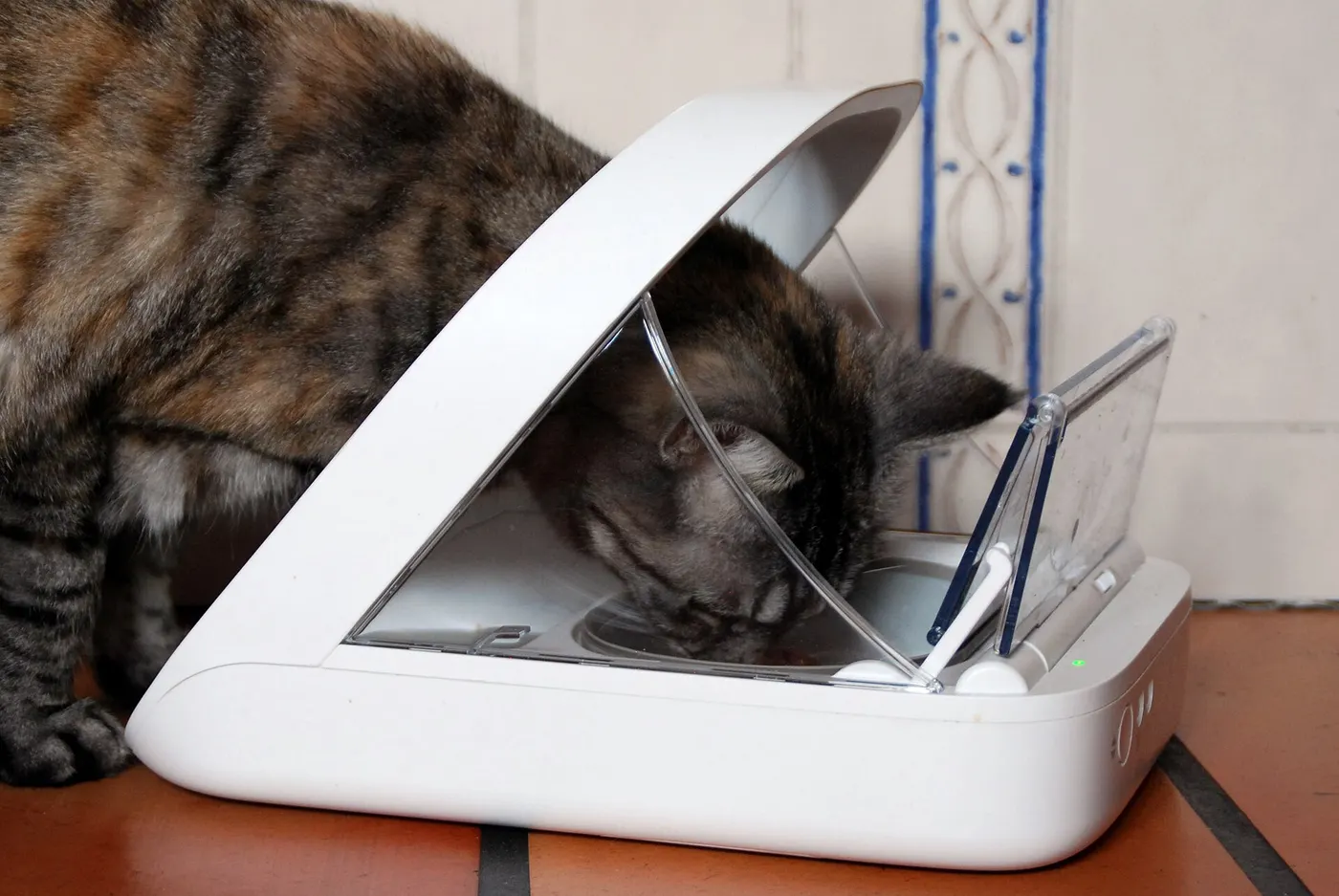
Three devices dominate this category and they answer three unrelated questions. A camera tells you what is happening in one room. A feeder makes meals happen without you. A tracker tells you where an animal went after it had already gone.
Deciding between them by feature list produces a house full of gadgets that each solve a fifth of a problem. Deciding by the hours your animal is alone, and by what actually goes wrong in those hours, produces one purchase. Example prices below show the arithmetic and were checked on 2026-11-03.
Start with the hours, not the product
Write down the longest stretch your animal is alone on an ordinary weekday. For most working households that is between 8 and 10 hours, and the honest version includes the commute at both ends rather than the contracted day.
Then write down what has actually gone wrong in those hours over the last year. Missed meals, chewed skirting, barking the neighbours mentioned, a cat that did not come in, a door left open by a delivery. That list is shorter than the catalogue and it points at one device rather than three.
A 9-hour weekday with two meals in it is a feeder problem, and a feeder solves it completely. The same 9 hours with destructive boredom in them is not a camera problem, because a camera records the chewing without preventing it; it is a problem about exercise, company and the environment, and no device on this page addresses those.
| Device | The question it answers | What it does not do | The number that decides it |
|---|---|---|---|
| Camera | What is happening in one room, right now | Cover the house, or intervene in anything | Hours alone on a weekday |
| Automatic feeder | Whether meals happen on time while you are out | Provide fresh water, or judge appetite | Meals a day, and hopper capacity in days |
| GPS tracker | Where the animal is after it has already gone | Meet the legal identification duty | Days between charges |
| Microchip | Who the animal belongs to, permanently | Report a live position | None: it is compulsory |
The microchip row is the only one on this table that is a legal requirement rather than a purchase decision.
Cameras show one room, in the dark, in monochrome
A fixed indoor camera covers one angle of one room. If your animal moves between a kitchen, a hall and a bedroom, one camera covers roughly a third of the problem, and three cameras at an example £35 each is £105 before any subscription starts.
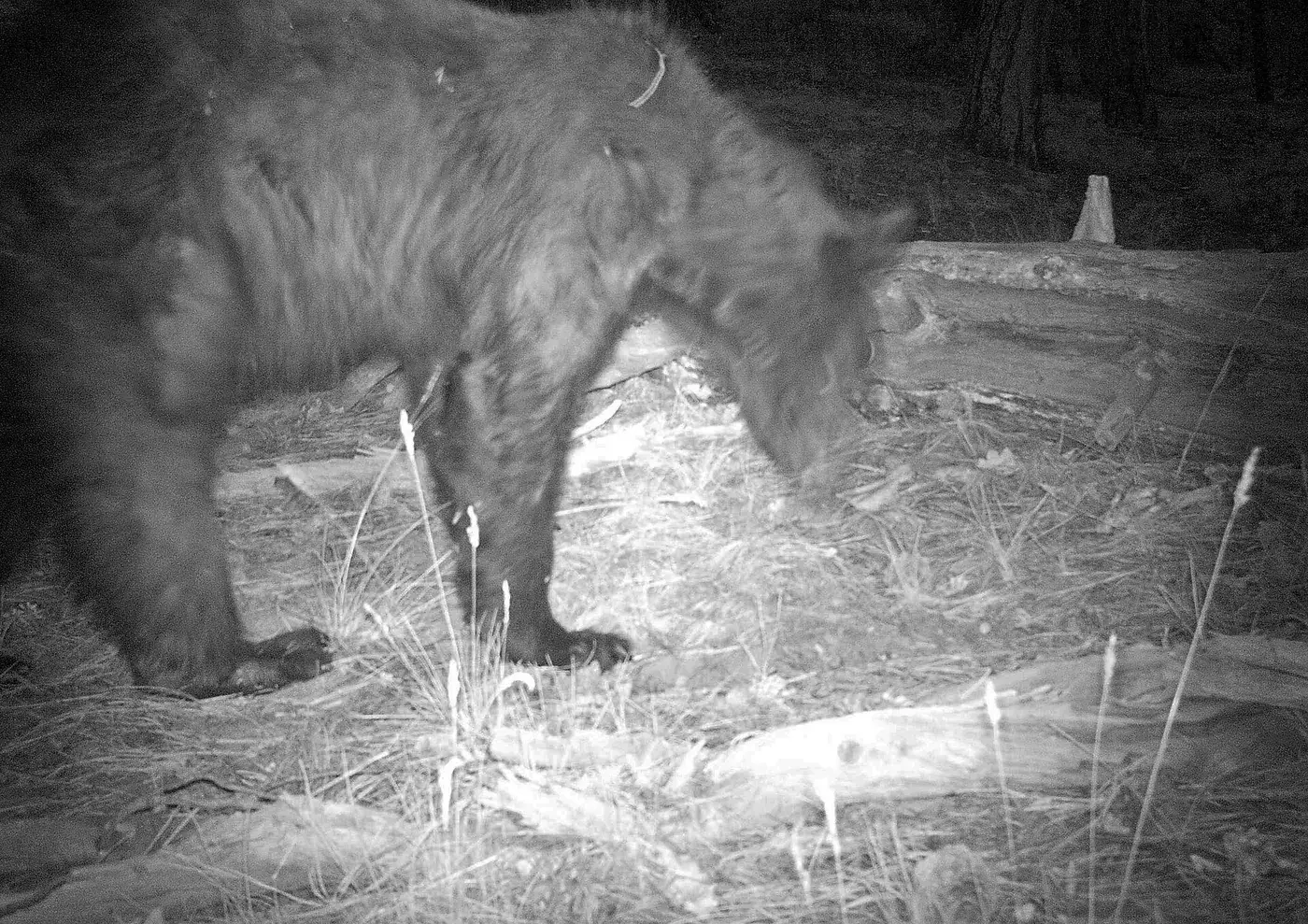
At night and in a dim hallway the image is infrared: monochrome, grainy, and good for answering 'is the dog on the sofa' rather than 'is the dog limping'. People who buy a camera expecting diagnostic detail at three in the morning are usually disappointed by physics rather than by the product.
Two questions settle whether a given camera is worth it. Does it record to a local card when the subscription lapses, and how many days of history does it keep without a plan. A camera that keeps nothing locally is a camera you cannot stop paying for without losing the function you bought.
- One camera covers one angle of one room, so count the rooms before counting the features
- Three cameras at an example £35 each is £105 of hardware before any plan
- Night images are infrared and monochrome, which limits them to presence and position
- Ask whether recording continues to a local card when a subscription lapses
A tracker is not a microchip, and the law is explicit
Government guidance is direct about identification: all dogs in the United Kingdom must be microchipped and registered by the time they are 8 weeks old, and in England a cat must be microchipped and registered by 20 weeks. You can be fined up to £500 if an animal that should be chipped is not, and up to £500 again if it is not registered on a compliant database.
The same guidance puts the ongoing duty on the keeper: you are responsible for keeping the microchip information up to date, for example after moving house. An out-of-date database entry is the most common reason a found animal does not get home, and it is free to fix.
A GPS collar is a different thing entirely. It reports a live position while it has charge and signal, which is genuinely useful for a cat with a wide range or a dog that bolts at fireworks. It is removable, it goes flat, and it satisfies none of the duty above. The sensible order is chip first, register, keep the details current, and add a tracker if the animal's behaviour justifies it.
| Requirement | What the rules say | What a tracker does instead |
|---|---|---|
| Dogs | Microchipped and registered by 8 weeks old | Reports a position while charged; does not identify ownership |
| Cats in England | Microchipped and registered by 20 weeks old | Same, and a collar is removable in a way a chip is not |
| Keeping details current | The keeper must update the database, for example after a house move | An address in an app is not the microchip database |
| Penalty | Fines of up to £500 for not chipping, and up to £500 for not registering | No device reduces that exposure |
The 20-week cat requirement applies in England. The dog requirement applies across the United Kingdom.
What no device on this page can do
Section 9 of the Animal Welfare Act 2006 makes it an offence not to take reasonable steps to meet the needs of an animal you are responsible for, and it lists five of them: a suitable environment, a suitable diet, the ability to exhibit normal behaviour patterns, appropriate housing with or apart from other animals, and protection from pain, suffering, injury and disease.
Read that list against the device list. A feeder contributes to one of the five. A camera contributes to none of them; it reports on them. A tracker contributes to none of them either. That is not a criticism of the products, it is the correct scope for them, and it is the reason a device purchase should never be the answer to a welfare concern.
The practical version is that a dog left 9 hours needs the walk, the company and the enrichment first. If those are in place and the remaining problem is that meals land at the wrong time, buy the feeder. If they are not in place, a camera will simply give you a high-definition record of the problem.

An order of purchase that usually works
Chip and register first, because it is compulsory, cheap and the only measure that works when the battery is flat and the collar is in a hedge. Fix the routine second: walks, company, water, somewhere to be. Buy a feeder third if meal timing is the remaining failure, because it is the one device that removes a problem rather than reporting it.
Buy a camera fourth, and only with a specific question in mind that a camera can answer — which room, at what time, doing what. Buy a tracker fifth, and only if the animal has a history of going further than you can follow. On the example figures here, that order spends £105 on three cameras last rather than first.
Before you buy
- Write down the longest stretch your animal is alone on an ordinary weekday, commute included
- List what has actually gone wrong in those hours over the past year
- Confirm the microchip is registered and that the database entry has your current address
- Decide which single room a camera would need to cover before buying any camera
- Check whether a camera keeps recording locally when its subscription lapses
- Count the meals a day and the days a feeder's hopper would cover at your portion size
- Buy nothing that is meant to solve a behaviour problem a routine would solve
Questions readers ask
- Is a GPS collar enough instead of a microchip?
- No. Microchipping and registration are compulsory for dogs by 8 weeks and for cats in England by 20 weeks, with fines of up to £500 for failing to chip and up to £500 for failing to register. A collar comes off, goes flat and loses signal, and nobody who finds a collarless animal can read an app you own.
- How many cameras does a normal house need?
- One per room you genuinely need to see, which for most households is one or two rather than four. Three cameras at an example £35 each is £105 of hardware, and each one may add its own subscription. Decide which single room answers your actual question before buying a second.
- Will a feeder cover a weekend away?
- Only for food, and only for as many days as the hopper holds at your portion size. It does not refresh water, clear a litter tray, or notice that an animal has stopped eating. A feeder is a tool for a working day rather than a substitute for someone coming in.
- My dog is destructive when left. Will a camera help?
- It will show you when and where it starts, which can be useful evidence about triggers. It will not change the behaviour. The Animal Welfare Act lists the ability to exhibit normal behaviour patterns among the five needs a keeper must meet, and destructive boredom usually points at exercise, company and enrichment rather than at hardware.
- What should I do after moving house?
- Update the microchip database entry before you unpack. Government guidance puts that duty on the keeper explicitly and gives a house move as the example, and an out-of-date entry is the usual reason a chipped animal is not reunited. It costs nothing and takes a few minutes with the database company's site.
Sources
- GOV.UK — Get your dog microchipped: dogs by 8 weeks, cats in England by 20 weeks, fines up to £500, duty to keep details up to date — checked 2026-11-03
- legislation.gov.uk — Animal Welfare Act 2006, section 9: duty to ensure welfare and the five needs — checked 2026-11-03
- GOV.UK — Unfair commercial practices (CMA207): total price in an invitation to purchase, applying from 6 April 2025 — checked 2026-11-03
Advertising is not enabled on this site yet. When it is, ads will be labelled and kept visually separate from the guides.